Things to Do in Managua in July
July weather, activities, events & insider tips
Low Season · Budget Friendly
July Weather in Managua
Long-run averages for July
87°F (30°C)
High Temp
72°F (22°C)
Low Temp
5.7 inches (145 mm)
Rainfall
77%
Humidity
12
Sunny-Day UV
⚠ Afternoon downpours can cause flash flooding in low-lying Managua neighborhoods and underpasses, avoid driving through standing water and stay clear of unpaved roads after heavy rain
⚠ Dengue-carrying mosquitoes are most active during the rainy months, with standing water after storms creating breeding habitat across the city, use repellent with DEET consistently, at dawn and dusk, and sleep under a net if your room lacks screened windows
⚠ Lake Xolotlán shoreline areas can flood during heavy July rains, temporarily closing sections of the Puerto Salvador Allende promenade and lakefront walkways
Making the most of July in Managua? Browse tours and activities in Managua on GetYourGuide.
Is July Right for You?
Weigh the advantages and considerations before booking
Advantages
- + July lands in a relative rainfall lull between June's 8.8 inches (224 mm) and the September-October peak that dumps over 8 inches (200+ mm) a month. This makes it the most workable stretch of the rainy season. Travelers who plan around afternoon showers will find their window.
- + Green-season pricing pushes accommodation and day-tour rates well below dry-season peaks. Operators who fill up weeks in advance from December through March tend to have open spots with just a few days notice in July. The savings are real.
- + The volcanic landscape around Managua reaches its most dramatic state in July. The slopes of Masaya, the crater walls ringing Laguna de Apoyo, and the hillsides along the road to Granada turn a saturated, almost electric green. The brown, dusty dry season never delivers this.
- + July 19 brings the Aniversario de la Revolución, one of Nicaragua's most significant national celebrations. Concerts, rallies, and street gatherings fill Managua's Plaza de la Fe. Visitors get a window into the country's political identity. No museum can replicate this.
Considerations
- − Afternoon downpours arrive with little warning, typically between 2 PM and 5 PM. They can turn Managua's streets into temporary rivers within minutes. Front-load outdoor plans into mornings. This is non-negotiable.
- − Humidity averaging 77% makes the 30°C (86°F) afternoon high feel considerably warmer. The air stays thick and warm well into the night. Even with the temperature dropping to 22°C (72°F), you rarely feel cool. Pack accordingly.
- − Mosquito populations along the Lake Managua shoreline and in residential neighborhoods spike during the rains. Standing water after storms creates breeding habitat across the city. Repellent is a daily necessity, not a precaution. Do not skip it.
Settled on July? Compare hotel prices in Managua for your dates on Trip.com.
Best Activities in July
Top things to do during your visit
July settles over Managua like a warm, damp cloth. The rainy season is well underway by now. But this is not the deluge month. That distinction belongs to June, which dumps nearly nine inches of rain across the capital, and to September and October, which are heavier still. July eases off to around five and a half inches of rainfall, and the pattern is reliable enough that locals plan around it. Mornings break warm and mostly clear, the sky a bleached white that deepens to grey by early afternoon, and by two or three o'clock the clouds crack open. The downpours are theatrical. Water hammers corrugated roofs along the Carretera a Masaya, gutters in the old centro flooding within minutes, the air filling with the mineral smell of wet concrete and the sweet rot of soaked earth. Then it stops, often within an hour, and the city exhales. Steam lifts off the asphalt. Evening temperatures drop to the low seventies, and the lakefront along Puerto Salvador Allende fills with families eating vigorón from banana-leaf wrappings, the vinegar tang of the curtido sharp in the cooling air. Managua in July is a city between intensities. The school year is in session, the December holiday rush months away, and the capital operates at its working rhythm. Traffic along the rotondas is dense but purposeful. The volcanic ridges south of the city, the jagged silhouette of the Sierras de Managua visible from nearly any elevated point, are at their greenest, the slopes furred with new growth after two months of rain. This is the season when day trips from Managua to Masaya, Granada, and León feel most rewarding. The countryside along the Pan-American highway is lush rather than the scorched brown of March, the crater lakes are full, and the heat, while real, is several degrees cooler than the punishing highs of April, when the thermometer pushes past thirty-four degrees. Expect daytime temperatures around thirty degrees Celsius and carry a compact rain jacket. Not because you will be cold. Because the afternoon storms arrive without negotiation. What draws visitors to Managua in July is less the city itself and more its position as a launchpad. The capital sits within striking distance of Nicaragua's most dramatic landscapes. Masaya Volcano's glowing lava lake is a forty-minute drive south, the colonial streets of Granada an hour southeast, and León's cathedral, a UNESCO World Heritage site, ninety minutes northwest. Managua's own pleasures are quieter. The Malecón along Lake Xolotlán catches a breeze at dusk. The old cathedral, Santiago de Managua, stands roofless and earthquake-cracked near the Plaza de la Revolución, its hollow nave open to the sky. The food scene runs deep if you know where to look. Fritangas along Calle Principal dish out gallo pinto with cuajada and sliced plantain, the sour-sweet smell of fermenting cacao drifting from market stalls. Safety in Managua requires the same urban awareness as any Central American capital. Stick to well-lit commercial areas after dark, use registered taxis or ride-hailing apps, and keep valuables out of sight. The city rewards those who engage with it on its own terms rather than treating it as an inconvenient airport corridor.

Best of Granada, Mirador de Catarina and Masaya Volcano Tour
guided_experienceThe road south from Managua climbs through thickening green into the Pueblos Blancos, where the town of Catarina perches on the rim of a volcanic crater. From the Mirador de Catarina, the view plunges down into the Laguna de Apoyo, its water an opaque turquoise, ringed by jungle, with Granada's colonial rooftops and Lake Nicaragua glinting beyond. This full-day circuit pairs that panorama with the colonial grid of Granada itself, where crumbling indigo and ochre facades line streets that smell of horse sweat and roasting cacao, before finishing at Masaya Volcano as dusk settles and the Santiago crater's lava lake begins to pulse orange against the darkening sky. The heat of the magma radiates upward in waves you can feel on your face from the viewing platform.
Three of Nicaragua's most well-known landscapes compressed into a single day, with the sequence calibrated so you reach the volcano at the hour when the lava glow is most dramatic against fading light.
Insider tip: Eat lunch in Granada at a comedor near the Parque Central rather than the tourist-facing restaurants on La Calzada. The food is better, the portions larger, and you avoid the midday crowd that clusters along the pedestrian strip.
This month: July's afternoon cloud cover can obscure the Mirador de Catarina view by mid-afternoon, but it also means the Masaya Volcano lava glow is visible earlier in the evening against overcast skies, often before full dark.

From Managua: León, Sandboarding Cerro Negro + Cathedral UNESCO
culturalLeón sits on a flat, heat-soaked plain northwest of Managua, and arriving there feels like stepping backward in time and sideways in temperature. The air is drier than the capital, the colonial architecture more concentrated, and the Basílica Catedral de la Asunción, the largest cathedral in Central America, anchors the city with a mass of white volcanic stone that glares under the sun. Walking its rooftop is a sensory jolt. The rough, sun-heated stone under your palms, the wind whipping across the open expanse, and below, León's grid of terracotta roofs stretching to where Cerro Negro's black cone rises from green farmland. After the cathedral, the day pivots to that volcano, a barren, ash-dark slope where you hike forty-five minutes to the rim, the loose scoria crunching and sliding underfoot, sulfur stinging your nostrils, and then sit on a thin wooden board and hurtle down the slope at speeds that make your eyes water.
The pairing of a UNESCO-listed cathedral rooftop walk with the raw adrenaline of sandboarding down an active volcano makes this the most tonally extreme day trip in Nicaragua.
Insider tip: Wear closed-toe shoes with ankle support for Cerro Negro. The volcanic gravel is abrasive and gets inside low-cut sneakers. Bring a bandana to cover your nose and mouth on the descent, where fine ash kicks up into your face.
This month: July rainfall occasionally makes the upper slope of Cerro Negro slicker, which can increase sandboarding speed on the descent. Guides adjust board positioning accordingly.

2 full days tour Granada + Lava+Leon area
day_tripThis two-day itinerary solves Managua's central logistical puzzle. The country's best attractions are spread across opposite ends of the Pacific lowlands, and cramming them into a single day means either rushing or skipping. Day one heads southeast to Granada, where the afternoon light turns the cathedral's butter-yellow facade golden and the horse-drawn carriages clop through streets lined with thick-walled colonial houses, their interior courtyards invisible from the street but audible, fountains splashing, parrots screeching. The evening lands at Masaya Volcano for the lava viewing. Day two reverses direction to León and Cerro Negro, the landscape shifting from lakeside colonial charm to raw volcanic terrain, the air thickening with the chemical bite of sulfur as you approach the crater rim.
The two-day format gives each destination the time it deserves rather than the breathless sprint of a single-day tour, and lets you experience Masaya Volcano's lava glow at night rather than at the diluted edge of sunset.
Insider tip: Pack a separate set of clothes for the Cerro Negro day. Volcanic ash gets into everything, and you will want clean options for the drive back to Managua rather than sitting in grit-caked shorts.

Cerro Negro volcano, VIP experiences "Individual and Group"!!!
private_tourCerro Negro is the youngest volcano in Central America, less than two hundred years old, and it looks it. A stark black cone of loose scoria and ash rising from the surrounding green, as if someone dumped a mountain of coal ash onto a golf course. The private format here changes the experience. Rather than hiking in a queue of twenty-plus people, you ascend at your own pace, the silence broken only by the crunch of your boots on volcanic gravel and the wind moaning across the exposed ridgeline. At the summit, the smell is elemental. Hot rock, sulfur, and something metallic that catches the back of your throat. The sandboarding descent on a private tour means your guide can position you for longer runs and adjust technique coaching to your comfort level, without the time pressure of managing a large group.
The private format transforms Cerro Negro from an adventure-tourism conveyor belt into something closer to an expedition, with the pace, route choices, and descent timing all shaped around you.
Insider tip: Ask your guide to take the slightly longer approach trail on the windward side of the cone. The footing is marginally better, and the view opens to include the chain of older volcanoes stretching southeast toward Lake Managua, a sight the standard trail obscures.
This month: July's green-season vegetation around the base of Cerro Negro creates a sharper visual contrast with the black volcanic cone than the dry-season months, when the surrounding fields are brown and the boundary between farmland and volcano blurs.

Masaya Volcano Night Tour!!!
guided_experienceAfter dark, the Santiago crater at Masaya Volcano transforms. The daytime experience, peering into a smoking pit, feeling residual heat, squinting against glare, gives way to something primal. The lava lake at the crater's base glows a deep, shifting orange, its surface cracking and reforming in slow motion, each fissure releasing a burst of brighter molten light. The heat rises in pulses you can feel tightening the skin on your forehead. The sound is a low, irregular rumble punctuated by sharper cracks, like a massive fire settling. The sulfur smell intensifies after dark as cooler air traps the gases closer to the viewing platform. Managua sits close enough that this works as an evening outing rather than an expedition. The crater rim is barely forty minutes from the capital, and the national park gates open for night visits on a controlled schedule.
Seeing an active lava lake after dark, with no ambient light to dilute the glow, is one of the most elemental natural spectacles accessible within an hour of any Central American capital.
Insider tip: Bring a damp cloth to press over your nose if the sulfur fumes intensify. Wind shifts are unpredictable at the crater rim, and on some nights the gas concentration is strong enough to make your eyes stream.
This month: July's overcast evenings can lower the cloud ceiling over the crater, which sometimes reflects the lava glow back downward and intensifies the orange light visible from the viewing platform, an effect less common during the dry season's clear skies.

Nicaragua: Private Shuttle Service from Airport to Hotel Managua
transportThe Augusto C. Sandino International Airport sits on the eastern fringe of Managua, and the drive into the city, or to hotels along the Carretera a Masaya corridor, is a disorienting introduction if you are navigating it for the first time. Managua has no traditional street grid, no numbered addresses in most neighborhoods, and directions are given by landmarks, many of which no longer exist. A private shuttle eliminates the negotiation with unofficial taxi drivers outside the terminal, the uncertainty of fare, and the particular stress of arriving after dark into an unfamiliar city where the roads are unmarked and the GPS mapping is unreliable. The vehicle is waiting at arrivals, the driver knows the hotel by name, and the ride is air-conditioned, a relief after stepping from the terminal into Managua's warm, humid night air, where the smell of diesel and flowering trees mingles at the curb.
Removing the airport-to-hotel friction from a Managua arrival, on a night flight, lets you start the trip from a position of calm rather than anxiety.
Insider tip: Confirm your hotel's exact location with the driver before departure, using the hotel's own landmark-based directions rather than a street address. Managua's addressing system is notoriously imprecise, and even GPS pins can land you a block off in neighborhoods where the streets look identical after dark.
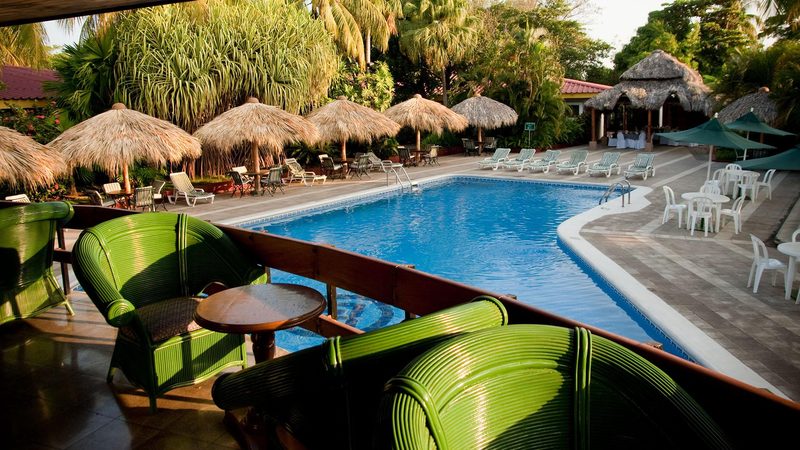
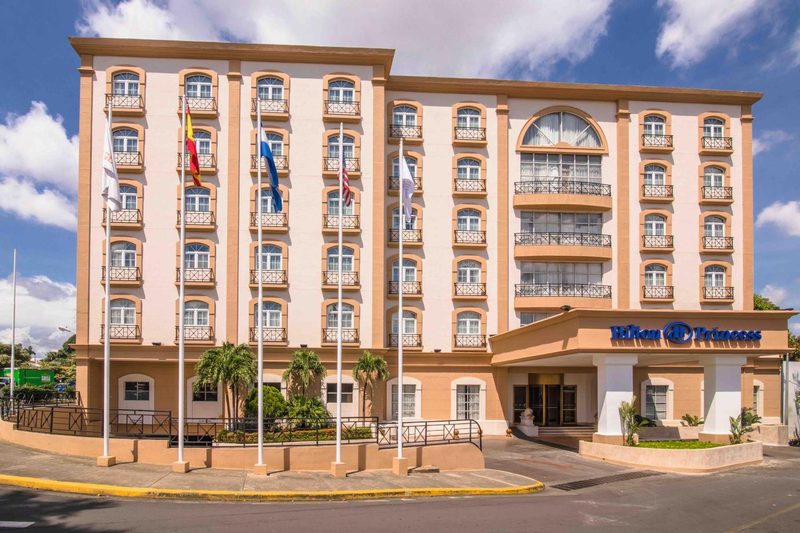
Where to Stay in Managua in July
Hand-picked hotels across price tiers for July travellers.
Public Holidays in July
Dates that affect opening hours, transport and crowds
Liberation Day
Observed nationwide as a public holiday.
Liberation Day
Observed nationwide as a public holiday.
Packing Checklist
Bookmark this page — your progress is saved between visits
Need the full list with shopping links?
Climate-specific gear, brand recommendations, and what to leave at home.
View Managua Packing List →Essential Tips
Insider knowledge and common pitfalls to avoid
Insider Knowledge
Managua's street-addressing system uses landmarks instead of street numbers. Locals give directions as 'two blocks south of where the old Pepsi factory used to be, one block east.' The landmark might not exist anymore. Download offline maps before you arrive. Mobile data coverage gets patchy outside the main commercial corridors.
The nearest swimmable beaches on the Pacific coast, Pochomil and Masachapa, sit about 65 km (40 miles) west of Managua. The drive takes roughly 90 minutes by car. These are not resort beaches. Expect dark volcanic sand. Expect strong undertow. Expect simple seafood shacks with plastic chairs under tin roofs. Do not expect loungers and table service. July surf tends to run rough. Swim only where you see locals in the water.
Managua comes alive after dark in ways the daytime heat makes hard to imagine. Fritanga stalls fire up across every neighborhood starting around 5 PM. Smoke from carne asada and maduro frito rises into the cooling air. The charred-plantain smell carries for blocks. Along the Carretera Masaya corridor, the bar and restaurant strip fills with locals from Thursday through Saturday. Puerto Salvador Allende's lakefront bars run late with live music on weekends. Walk the commercial strips between 6 PM and 9 PM. The temperature drops toward 24°C (75°F). The rain has usually passed by then.
Managua's safety reputation is worse than the current reality in the areas visitors frequent. Basic awareness still matters. Stick to well-lit streets after dark. Use registered radio-taxis or ride apps rather than hailing cars from the curb. Keep expensive cameras in your bag between shots. The lakefront at Puerto Salvador Allende and the commercial zone along Carretera Masaya are the most consistently patrolled parts of the city.
Avoid These Mistakes
Do not assume Managua has city beaches. Lake Xolotlán, which the city sits on, has been unsuitable for swimming due to decades of pollution. The Pacific coast is a 90-minute drive west. Laguna de Apoyo, the nearest clear-water swimming spot, is 35 km (22 miles) south. Build travel time into your plans if water is a priority.
Scheduling all-day outdoor itineraries without a midday retreat. By noon, heat and humidity combine that makes walking exhausting, and pushing through leads to dehydration faster than most visitors expect. Do what Managua's residents do: start early, disappear indoors between noon and 2 PM, then pick up again in late afternoon when the worst passes and before the rain typically rolls in.
Skipping Managua entirely as an airport transit point. Most travelers use Augusto C. Sandino International Airport as a connection to Granada or León. But the capital's lakefront promenade, its revolutionary landmarks, and its evening fritanga culture deserve at least one full day. You miss the country's real, lived-in capital, spread out, imperfect, smelling of woodsmoke and wet earth after a storm, and see only the colonial postcard towns.
Short on time? See day trips around Managua on GetYourGuide.
Ready to plan your trip to Managua?
Now that you've got the research covered, here's where to go next.
Explore More Activities in Managua
Didn't see anything interesting yet?
Browse Viator's full catalog of tours, day trips, food experiences, and private guides in Managua.
See All Managua Tours on Viator