Things to Do in Managua in May
May weather, activities, events & insider tips
Low Season · Budget Friendly
May Weather in Managua
Long-run averages for May
93°F (34°C)
High Temp
74°F (23°C)
Low Temp
5.1 inches (130 mm)
Rainfall
69%
Humidity
12
Sunny-Day UV
⚠ May marks the start of dengue and chikungunya season in Nicaragua. First rains create standing water where mosquitoes breed. Managua's urban landscape, with its unfinished lots and open drainage channels, provides ample habitat. Use repellent consistently, at dawn and dusk. Consider accommodations with screened windows or functioning air conditioning that allows you to sleep with windows closed.
⚠ Afternoon storms hit Managua hard. Low-lying areas flood fast. Mercado Oriental and lake neighborhoods get it worst. Don't wade through flooded streets. Don't drive low-clearance vehicles through standing water either. The murk hides open drains and trash. Wait it out.
⚠ Managua sits near the equator. The UV hits different here. Clear mornings are brutal. You will burn in 20 minutes flat. Cover up early. Slap on high-SPF sunscreen before you leave. Not after your skin starts screaming.
Making the most of May in Managua? Browse tours and activities in Managua on GetYourGuide.
Is May Right for You?
Weigh the advantages and considerations before booking
Advantages
- + May brings the sharp turn from bone-dry verano into green season. Managua's volcanic hillsides and lakefront shift from dusty brown to vivid green within weeks. The change hits hard. First rains cool the air by evening. Outdoor dining along Puerto Salvador Allende finally becomes pleasant after months of punishing heat.
- + Tourist numbers drop once the rains arrive. Day trips to Granada and Masaya Volcano fill fast during January through March high season. In May, you book with shorter notice. No busloads of cruise passengers crowd the viewpoints. Accommodation rates fall from dry-season peaks. May offers one of the more budget-friendly windows to visit.
- + Rains follow a predictable afternoon pattern in May, the wet season's first month. Mornings stay clear and hot. Storms roll in between roughly 2 PM and 5 PM. Evenings often clear again. Plan outdoor activities before lunch. Take a long midday break during the downpour. Then enjoy cooler evenings out.
- + Mangoes peak across Managua in May. Street vendors along Carretera Masaya and around Mercado Roberto Huembes sell them sliced with salt and lime. They blend them into fresco de mango. The perfume of ripe fruit hangs in warm air at every market stall. Jocotes, those small tart stone fruits Nicaraguans eat green with salt, also come into season. They appear piled in plastic bags at traffic-light intersections across the city.
Considerations
- − May heat ranks among the year's most intense. Daytime highs average 34°C (93°F). Rising humidity as rains begin creates a sticky, draining atmosphere. Walking between Managua's spread-out landmarks becomes exhausting. Unlike compact colonial cities, Managua was never rebuilt for pedestrians after the 1972 earthquake. Distances between points of interest run long. Shade remains scarce.
- − Afternoon storms, usually brief, turn Managua's streets into temporary rivers. Drainage infrastructure in many neighbourhoods is limited. Low-lying roads near the lakefront and around Mercado Oriental flood within minutes of heavy downpour. Relying on taxis or rideshares? Expect significant delays during and immediately after rain.
- − May sits in a shoulder zone. Some dry-season tour operations wind down. Wet-season rhythms have not fully settled. A few boat-based excursions on Lake Nicaragua reduce schedules. Some Laguna de Apoyo operators cut back. Confirm availability before building your itinerary around a specific activity.
Settled on May? Compare hotel prices in Managua for your dates on Trip.com.
Best Activities in May
Top things to do during your visit
Managua in May sits at a turning point. The long dry season that baked the city since November finally breaks, and the first serious rains arrive, averaging around five inches across the month, a sharp jump from the near-zero totals of March and April. Afternoon skies over Lake Xolotlán darken fast. The downpours tend to come in concentrated bursts between two and five in the afternoon, leaving mornings clear, steaming, and intensely hot. Daytime temperatures push toward 93°F. The air thickens with the sweet rot of mango and the petrichor of rain hitting volcanic soil that has been dry for months. The city smells different in May. Damp earth, wood smoke from streetside grills, and the bright green tang of new growth along the malecón at Puerto Salvador Allende, where Managua's lakefront promenade fills with families once the evening cool settles in. For travelers planning a week in Managua, May rewards flexibility. The mornings belong to you. The heat is fierce but the skies are open, and the day-trip corridors to Granada, León, and Masaya Volcano are at their most dramatic when storm clouds pile behind the crater rims. Restaurants across the Zona Hippos and Carretera Masaya neighborhoods serve quesillos, tightly rolled tortillas filled with soft white cheese and pickled onion, alongside cold tiste, the ground-cacao drink that Managuans reach for when the humidity climbs. Nightlife along the Carretera Masaya strip runs late and loud, with open-air bars where cumbia spills out into parking lots and the breeze off the lake carries the faint sulfur edge of nearby Masaya's fumes. Safety in Managua follows the same logic as any Central American capital. Stay in well-lit commercial zones after dark, use radio-dispatched taxis or ride-hailing apps, and keep valuables out of sight. The areas most frequented by travelers, the malecón, Metrocentro, Galerías Santo Domingo, and the hotel corridors along Carretera Masaya, are well-patrolled and feel markedly calmer than the city's reputation suggests. Managua is not a place you visit for the beaches. The closest Pacific shore is an hour west at Pochombo or Montelimar, and the lake itself is not swimmable. What Managua offers instead is a launchpad, a city whose location at the geographic center of Nicaragua puts every major attraction in the country within a half-day drive.

Best of Granada, Mirador de Catarina and Masaya Volcano Tour
guided_experienceThe run south from Managua to Granada takes under an hour. But the landscape changes completely. The capital's low concrete sprawl gives way to the tile-roofed colonial grid of Granada, where horse-drawn carriages clatter over cobblestones and the yellow facade of La Merced church glows in the morning sun. This full-day tour links Granada's cathedral square with the Mirador de Catarina, a lookout perched on the rim of the Apoyo Lagoon crater where the water below shimmers an almost unreal shade of cobalt, and finishes at Masaya Volcano, where you peer over a stone parapet into an active crater belching sulfurous smoke. The sequence is smart. Colonial architecture, volcanic lake, live crater. The guide narration fills in the geology and history that make the sights legible rather than just photogenic.
Granada, Catarina, and Masaya Volcano compressed into a single day gives you the three faces of Nicaragua's Pacific lowlands, colonial, pastoral, and volcanic, without the logistical friction of arranging each independently from Managua.
Insider tip: Ask the driver to stop at the roadside fritanga stands between Catarina and Masaya on the return leg, where pork ribs are charred over wood coals and served with gallo pinto and curtido slaw that tastes sharper and more acidic than what the tourist restaurants offer.

From Managua: León, Sandboarding Cerro Negro + Cathedral UNESCO
culturalLeón sits northwest of Managua, roughly ninety minutes by road, and the approach is flat, dry cattle country until the city's eighteen churches suddenly appear on the horizon, each one seemingly larger than the last. The centerpiece is the Basílica Catedral de la Asunción, a UNESCO World Heritage site whose rooftop you walk across in bare or socked feet. The white plaster radiates stored heat even in the early morning, and the panoramic view stretches from the Maribios volcanic chain to the haze of the Pacific. After the cathedral, this tour heads to Cerro Negro, a black cinder cone less than two centuries old, where you climb roughly forty minutes up a slope of loose volcanic gravel that crunches and slides underfoot, then sit on a wooden board and ride back down at speeds that leave your teeth gritty with ash.
Sandboarding down Cerro Negro is the most purely exhilarating twenty seconds in Central American travel, and coupling it with León's cathedral rooftop, where you feel the heat of centuries-old stone through your soles, makes for a day of extreme contrasts.
Insider tip: Wear long sleeves and closed shoes for the sandboarding descent. The volcanic gravel is abrasive enough to scrape exposed skin, and the jumpsuit they provide does not cover everything. Bring a bandana for your nose and mouth. The ash dust on the slide is fine and acrid.
This month: May's early-season rains occasionally dampen the upper slope of Cerro Negro in the late afternoon, which can slow sandboarding speeds. Morning ascents avoid this entirely.

2 full days tour Granada + Lava+Leon area
day_tripThis two-day itinerary solves the central planning problem Managua presents. The city itself is a base, not a destination, and the places worth lingering in, Granada and León, sit in opposite directions. Day one covers Granada's cobblestone streets, the Isletas archipelago on Lake Nicaragua where howler monkeys bark from treetop canopies and kayak paddles drip warm freshwater, and the lava fields near Masaya. Day two swings north to León and Cerro Negro's charcoal-colored slopes. Sleeping arrangements are included, so you do not backtrack to Managua between legs. The pace is unhurried enough to eat a long lunch at a Granada courtyard restaurant where ceiling fans creak overhead and the cacao drink is thick and cold.
Two full days let you cover both of Nicaragua's essential corridors at a pace that allows you to taste, listen, and linger, instead of the blurred windshield view a single-day sprint delivers.
Insider tip: Request that the Granada overnight be in the blocks immediately south of Parque Central rather than the noisier streets near the malecón. The southern blocks are quieter after dark and closer to the best morning coffee at the corner cafés where locals drink their brew black, sweet, and scalding.

Cerro Negro volcano, VIP experiences "Individual and Group"!!!
private_tourCerro Negro appears again here. But the experience is different when the group is small or private. The climb up this raw cinder cone, barely 170 years old, one of the youngest volcanoes in the Americas, takes roughly forty-five minutes on a surface that sounds like walking on broken pottery, each step releasing a puff of fine black dust that smells faintly of sulfur and hot metal. At the summit, the wind comes hard off the Pacific side and carries the tang of the ocean mixed with volcanic gas. The descent by board is faster in a small group because there is no queue at the top and no need to wait for a line of riders to clear the slope. The guides on this tour tend toward geology rather than patter, pointing out fumaroles where the ground hisses steam and the rock is warm to the touch.
A private or small-group format on Cerro Negro means you summit and descend at your own pace, with a guide who can stop at fumaroles and explain the geology instead of herding a crowd.
Insider tip: Bring a separate dry bag for your camera or phone. The volcanic grit penetrates pockets and cases. After the descent, your nostrils and ears will be lined with black dust. A wet cloth cleans it better than dry tissue.

Masaya Volcano Night Tour!!!
guided_experienceAfter dark, Masaya Volcano is a different creature entirely. The daytime experience shows you a smoking pit. The night tour reveals the reason locals once called this crater the Mouth of Hell. Standing at the reinforced concrete overlook, you look straight down into a lake of molten lava that pulses orange and red, its surface cracking and reforming in slow motion while the heat rises in visible waves and the smell of sulfur is sharp enough to sting the back of your throat. The sound is a low, uneven roar, not dramatic, but continuous, like a furnace that has been running for centuries. Park rangers limit viewing time at the crater rim, so the window is intense and brief. The drive from Managua takes about forty minutes, and the approach road winds through dry tropical forest where you might catch the green flash of a parrot crossing the headlights.
Seeing active lava at night from a public overlook is one of the rarest experiences available anywhere in Central America, and Masaya's proximity to Managua, under an hour by road, makes it absurdly accessible.
Insider tip: The park enforces a strict vehicle-only policy at the crater rim after dark for safety evacuation reasons. You stay in or near your vehicle and walk only to the designated overlook. Bring a headlamp but keep it off at the rim. Your eyes adjust to the lava glow within seconds, and artificial light ruins the effect for everyone.
This month: May's early wet-season clouds can occasionally obscure the crater view. Clear evenings after a midday rain tend to offer the best visibility as the air is washed clean of haze.

Nicaragua: Private Shuttle Service from Airport to Hotel Managua
transportManagua's Augusto C. Sandino International Airport sits on the city's eastern edge, and the ride to the main hotel corridors along Carretera Masaya or the Metrocentro area takes between twenty and forty minutes depending on traffic. Arranging a private shuttle in advance eliminates the airport-exit gauntlet of informal taxi offers. The driver meets you inside the terminal with a name placard, handles luggage, and delivers you to your hotel door in an air-conditioned vehicle. For a first arrival in Managua, after dark or on an overnight flight, the difference between a pre-booked transfer and negotiating on the curb is the difference between starting your trip composed and starting it rattled.
A pre-arranged airport shuttle removes the single most stressful moment in a Managua trip, the airport-exit taxi negotiation, and delivers you to your hotel without detours or fare disputes.
Insider tip: Confirm your flight number and arrival terminal with the operator at least 24 hours before landing. Managua's airport occasionally shifts domestic and regional arrivals between gates, and a driver waiting at the wrong exit adds unnecessary delay.
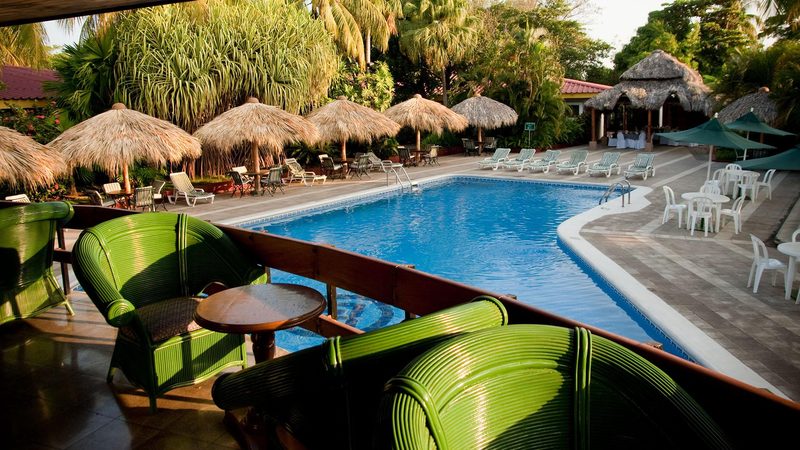
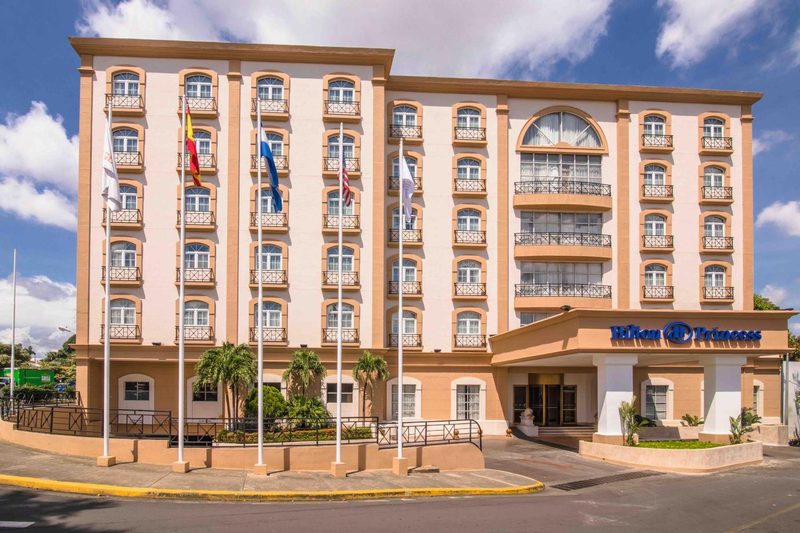
Where to Stay in Managua in May
Hand-picked hotels across price tiers for May travellers.
Public Holidays in May
Dates that affect opening hours, transport and crowds
Labour Day
Observed nationwide as a public holiday.
Army Day
Observed nationwide as a public holiday.
Labour Day
Observed nationwide as a public holiday.
Army Day
Observed nationwide as a public holiday.
Packing Checklist
Bookmark this page — your progress is saved between visits
Need the full list with shopping links?
Climate-specific gear, brand recommendations, and what to leave at home.
View Managua Packing List →Essential Tips
Insider knowledge and common pitfalls to avoid
Insider Knowledge
Managua lacks a walkable centre like Granada or León. The 1972 earthquake destroyed the old downtown. The city rebuilt as scattered rotondas, shopping centres, and barrios linked by highways. Walking between major landmarks leaves you sunburned and exhausted. Use taxis or rideshare apps between sites. Save walking energy for destinations themselves. Locals almost never walk between neighbourhoods.
The best fritanga in Managua, those open-air grilled meat and plantain spreads that define the city's evening meals, appears after 5 PM at neighbourhood spots along Carretera Masaya and in Altamira. Look for plastic chairs filled with families. Charcoal smoke carries the sweet-savoury scent of caramelised plantain and sizzling beef. The gallo pinto served alongside, that rice and bean staple that is essentially Nicaragua's national dish, tastes completely different when crisped on a hot plancha rather than simply reheated.
May falls during what Nicaraguans call the entrada del invierno, the entrance of winter. Visitors confuse this with cold. Here it means only rain. Locals adjust their entire daily schedule around afternoon storms. Markets open earlier. Construction crews start at dawn. Social life moves to evening. Match this rhythm. You will be far more comfortable than tourists pushing midday sightseeing.
Puerto Salvador Allende, the lakefront malecón, is Managua's most popular evening gathering place. Friday and Saturday nights fill with families, couples, and friends eating from outdoor food stalls and listening to live music. The breeze off Lake Managua cools the air noticeably. The lake itself is too polluted for swimming. Arrive around 6 PM. Grab a lake-view table before weekend crowds peak.
Avoid These Mistakes
Never try to sightsee on foot through central Managua as if it were a compact colonial city. The old centre was destroyed in 1972. Distances between landmarks like the old cathedral ruins, Loma de Tiscapa, and Puerto Salvador Allende span several kilometres across terrain with minimal sidewalks and no shade. Use transport between stops. Your feet will thank you.
Never schedule outdoor activities for the afternoon. May's rain pattern is remarkably consistent. Clear mornings. Building heat. Then heavy storms from roughly 2 PM onward. Tourists who sleep in and head out at noon hit the worst heat followed by the worst rain. Start at 7 AM. Finish outdoor plans by 1 PM. Shift to indoor venues or your accommodation for the storm window.
Never treat Managua as the destination rather than the base. The capital holds legitimate points of interest. The old cathedral. Loma de Tiscapa. The markets. Puerto Salvador Allende. But the most memorable experiences within reach are day trips. Masaya Volcano at night. Granada's colonial core. Laguna de Apoyo's crater lake. León's cathedral rooftop. Experienced travelers use Managua as a hub. Build your itinerary around these spokes.
Short on time? See day trips around Managua on GetYourGuide.
Ready to plan your trip to Managua?
Now that you've got the research covered, here's where to go next.
Explore More Activities in Managua
Didn't see anything interesting yet?
Browse Viator's full catalog of tours, day trips, food experiences, and private guides in Managua.
See All Managua Tours on Viator