Things to Do in Managua in March
March weather, activities, events & insider tips
Low Season · Budget Friendly
March Weather in Managua
Long-run averages for March
92°F (33°C)
High Temp
71°F (21°C)
Low Temp
0.1 inches (3 mm)
Rainfall
58%
Humidity
13
Sunny-Day UV
⚠ The sun here hits different. At this near-equatorial latitude, UV exposure peaks during the driest, clearest month of the year. Clouds vanish. The sun sits near-zenith. Unprotected skin burns in under 20 minutes. Pack SPF 50+. Bring a wide-brimmed hat. Wear protective clothing for any outdoor activity. Reapply sunscreen after sweating.
⚠ Heat exhaustion is a real threat. Sustained highs of 33°C (92°F) combine with radiant heat from pavement and volcanic rock. Core body temperature spikes fast. This happens on hikes to Masaya Volcano or Cerro Negro. Carry at least 2 liters of water per person. Do this for any excursion lasting more than 2 hours. Watch for dizziness. Nausea matters. Confusion arrives suddenly. These warning signs creep up without warning.
Making the most of March in Managua? Browse tours and activities in Managua on GetYourGuide.
Is March Right for You?
Weigh the advantages and considerations before booking
Advantages
- + March is the driest month in Managua's calendar, with a total of just 3 mm (0.1 inches) of rainfall across the entire month. You can book volcano night tours, crater lake swims, and open-air market days without a single weather cancellation. Cloudless evenings sharpen the lava glow at Masaya Volcano's Santiago crater into something almost hallucinatory, an orange pulse against black rock that wet-season fog routinely smothers.
- + Semana Santa falls March 21 through 28 in 2027, and Nicaragua observes it with an intensity that will recalibrate your sense of what a holiday week can be. Processions carrying gilded saints thread through Managua's barrios to the sound of brass bands and the thick smoke of copal incense, while sopa de queso and almibar, fruit simmered in panela until it turns amber and syrupy, replace the usual beef at family tables and market stalls across the capital.
- + Humidity sits at 58%, the lowest reading of the year and nearly 30 points below October's swampy 84%. Before 9 AM along Puerto Salvador Allende's lakefront, there is an actual breeze off Lake Xolotlan that dries the sweat on your neck instead of adding to it. That window of dry comfort disappears entirely once the rains arrive in May.
- + Clear, stable weather turns Managua into an ideal staging base for the three excursions that justify the trip: Granada's colonial core to the southeast, Leon and Cerro Negro's volcanic sand slopes to the northwest, and the jungle-ringed swimming hole of Laguna de Apoyo in between. All sit within 90 minutes by road, and March's dry conditions mean no washed-out highways, no mud on hiking trails, and visibility from the Catarina viewpoint that stretches clean to the horizon.
Considerations
- − The heat is punishing. At 33°C (92°F), March shares the title of hottest month with April, and without the afternoon thunderstorms that grant the wet season a daily reprieve, the sun just hammers the city from sunrise to sunset. Between 11 AM and 3 PM, the asphalt along Carretera Masaya radiates heat you can feel through the soles of your shoes, and even locals retreat indoors. Plan your day around shade and air conditioning during those hours or you will regret it.
- − Five months without meaningful rain have turned the hills ringing Managua to the color of dried straw. Lake Xolotlan's shoreline pulls back to cracked mud flats, and the trees along the Tiscapa crater rim stand mostly bare. If your mental image of Nicaragua is emerald jungle and dripping canopy, March will disappoint. That version of the country arrives in June and stays through November.
- − Semana Santa week empties the capital as Managuan families pour toward San Juan del Sur, Pochomil, and the Pacific beaches. Restaurants, markets, and shops begin closing by Wednesday afternoon, and by Good Friday the commercial districts feel abandoned. Intercity buses and domestic flights fill weeks ahead, and accommodation at beach towns hits peak pricing. If your plans hinge on Managua's restaurants and nightlife, schedule them for the first three weeks of the month.
Settled on March? Compare hotel prices in Managua for your dates on Trip.com.
Best Activities in March
Top things to do during your visit
March in Managua hits the driest, hottest edge of Nicaraguan summer. The average high reaches 33°C (92°F). Rainfall drops to a near-negligible 3 millimetres for the entire month. That is less than any other time of year. The air carries none of the heavy dampness that settles over the capital from May onward, when the rains begin in earnest and monthly totals can increase past 130 millimetres. Instead, the sky over Lake Managua stays pale and enormous. Haze collects along the volcanic ridgeline to the south. Evenings cool to around 21°C (71°F). They bring a dry warmth that pulls Managuans out to the lakefront malecón at Puerto Salvador Allende. The smell of grilled meat and plantain drifts from open-air vendors. The Momotombo volcano glows faintly at the far shore. This is the season when Managua functions most cleanly as a launching point. The capital itself is decentralized. It spreads across rotondas and unnamed streets in a layout that still bears the scars of the 1972 earthquake. Travelers who arrive expecting a colonial core will find instead a large, low-slung city. The landmarks are commercial plazas, lakefront parks, and the rebuilt Santiago of Managua Cathedral. Its pale concrete domes are visible from the old centre. But Managua's real power in March is proximity. The dry weather keeps volcanic trails firm and visibility sharp. The roads to León and Granada stay clear. The Pacific beaches near Pochomil sit less than an hour to the southwest. For anyone asking whether Managua is safe to use as a base: the main tourist corridors, the malecón, Metrocentro, the Carretera Masaya restaurant strip, are well-traveled and functional. March's dry conditions mean fewer disruptions to transport schedules. The restaurants along Carretera Masaya and in the Zona Rosa district serve some of the most underrated food in Central America. There is slow-cooked indio viejo with the tang of sour orange. Nacatamal steamed in banana leaves until the masa turns silky. Fresh quesillo rolled in its own warm whey. Managua's nightlife, concentrated around Zona Hippos and the bars near the UNAN campus, runs late and loud. Reggaetón bleeds out of open doorways. The sweetish smoke of rum and Coca-Cola mixes with exhaust. The city does not charm on first sight. It earns its place as you learn to navigate its rhythms. In March, those rhythms run at their steadiest.

Best of Granada, Mirador de Catarina and Masaya Volcano Tour
guided_experienceThis full-day guided experience leaves Managua early. It threads together three of Nicaragua's most concentrated landscapes in a single arc south. You reach Granada, its colonial facades painted in peeling ochre and turquoise along La Calzada, before the midday heat flattens the streets. Then you climb to the Mirador de Catarina. The Laguna de Apoyo sits below you in a volcanic crater so well round it looks engineered. The water shifts between jade and cobalt depending on the angle of the sun. The day closes at Masaya Volcano. The crater's sulfurous breath rolls up in pale clouds. The basalt rim drops away into a throat of heat and stone.
Three distinct Nicaraguan landscapes, colonial city, crater lake, active volcano, compressed into a single guided day that would take independent travelers two or three days to replicate.
Insider tip: Ask the guide to stop at the Catarina artisan market on the mirador approach. The carved soapstone figures cost a fraction of what Granada's tourist shops charge. The vendors will let you watch them work.
This month: March's near-zero rainfall and low humidity mean the Mirador de Catarina viewpoint delivers its sharpest visibility of the year. The far shore of the laguna and the slopes of Volcán Mombacho appear with a clarity that the wet season's cloud cover erases entirely.

From Managua: León, Sandboarding Cerro Negro + Cathedral UNESCO
culturalThe drive northwest from Managua to León crosses flat, heat-shimmered agricultural lowland. The city appears, denser and more intellectually fierce than Granada. Its university was founded in 1680. Its murals still carry the paint and fury of the Sandinista revolution. The UNESCO-listed Cathedral of León, the largest in Central America, anchors the city with massive white buttresses. You can walk across the rooftop in bare feet. The plaster is warm underfoot. The view stretches to the Pacific. Then the day pivots hard. Cerro Negro is a jet-black cinder cone rising 728 metres. You hike up loose volcanic gravel that crunches and shifts under each step. The sulfur smell sharpens near the rim. Then you sit on a wooden board and slide down the slope at speeds that blur the black sand into a roaring grey streak beneath you.
The only place on earth where you can walk across the roof of a sixteenth-century cathedral and, the same afternoon, sandboard down an active volcano at highway speed.
Insider tip: Wear long sleeves and closed shoes for Cerro Negro even in March heat. The black volcanic sand abrades exposed skin on the descent. The surface temperature of the cinder can scald through thin soles.
This month: Cerro Negro's loose cinder surface is at its driest and fastest in March, with no rain to dampen the sand. Experienced boarders report their highest speeds during the dry months.

2 full days tour Granada + Lava+Leon area
day_tripThis two-day itinerary treats Nicaragua's western corridor as a single continuous experience. It is not a series of disconnected stops. Day one moves south from Managua to Granada. The horse-drawn carriages creak past the Iglesia de La Merced. The air along the waterfront smells of fried cheese and lake brine. Then it continues to the rim of Masaya for the lava viewing. Day two swings north to León. You get the revolutionary murals, the cathedral rooftop, the Cerro Negro ascent. This stitches together the two rival colonial cities and the volcanic landscape between them. Solo travelers rarely manage this without dead time and logistical friction.
The only multi-day guided option that covers both Granada and León with volcanic excursions included. It eliminates the transport headaches that eat hours from independent itineraries.
Insider tip: Pack a headlamp for the Masaya evening visit. Pack a dry bag for your phone on Cerro Negro. The volcanic grit infiltrates pockets and cases with surprising persistence.

Cerro Negro volcano, VIP experiences "Individual and Group"!!!
private_tourThis private-format excursion to Cerro Negro strips away the large-group logistics. Those can turn the volcano into a queue. You ascend the same 728-metre black cone. The cinder crunches underfoot. Sulfur curls in thin wisps from fumaroles near the summit. The pacing is yours. Stay longer at the crater rim if you want to photograph the lava-scarred interior. Move faster on the descent if the heat is building. The private guide adjusts the route and the sandboarding setup to your group's nerve. The smaller party means you are not waiting in a line of twenty boards at the top.
The same adrenaline-soaked Cerro Negro descent. But on your own schedule and without the bottleneck of a large group queuing at the summit.
Insider tip: Request the guide bring a second board. The first run down the cinder slope always recalibrates your technique. The second run, once you trust the lean-back position, is where the real speed happens.
This month: March's bone-dry conditions keep the cinder at peak looseness. This makes for the fastest, smoothest sandboarding surface of the year. Wet-season visits contend with compacted, slower sand.

Masaya Volcano Night Tour!!!
guided_experienceAfter dark, Masaya Volcano becomes a different animal. The daytime views, grey rock, sulfur vents, tourist-centre exhibits, give way to an experience that is almost entirely auditory and thermal. You stand at the Santiago crater rim. You look down into a pit where molten lava pulses in a shifting orange pool. The heat rises in waves you can feel on your face and forearms from thirty metres above. The sound is a low, irregular rumble punctuated by the crack of cooling basalt. Parakeets, the only birds that nest inside an active crater, wheel in and out of the smoke. The night sky above Managua's glow frames the volcanic fumes in silhouette. The smell is dense, metallic. It is nothing like the clean sulfur of a hot spring.
One of only a handful of places on earth where you can look directly into an exposed lava lake at night, close enough to feel its radiant heat on your skin.
Insider tip: Bring a bandana or cloth to cover your nose and mouth. The sulfur dioxide concentration at the rim varies with wind direction. A sudden shift can send acrid gas directly into your face for several minutes.
This month: March's dry, clear skies and lower humidity produce sharper contrast between the lava glow and the dark crater walls. Wet-season visits often contend with cloud and mist that diffuse the view.

Nicaragua: Private Shuttle Service from Airport to Hotel Managua
transportAugusto C. Sandino International Airport sits on the eastern edge of Managua. The drive to most hotel zones, the Carretera Masaya corridor, Metrocentro, the Zona Rosa, takes between twenty and forty minutes depending on traffic. This private shuttle eliminates the negotiation at the airport taxi rank. The heat inside the terminal and the press of drivers can rattle newly arrived travelers. A driver meets you at arrivals with your name. The vehicle is air-conditioned. The route to your hotel is direct. For a city where street addresses do not exist in the conventional sense, directions still reference landmarks, some of them demolished decades ago, having a driver who already knows the destination removes the single most disorienting element of arriving in Managua.
The most frictionless way to bridge the gap between the airport and a city whose navigation system defies every mapping app.
Insider tip: Confirm your hotel's landmark-based address with the property before arrival. Many Managua hotels use reference points like "de donde fue el Sandy's, dos cuadras al lago" that a local driver will understand instantly but that Google Maps cannot parse.
Where to Stay in Managua in March
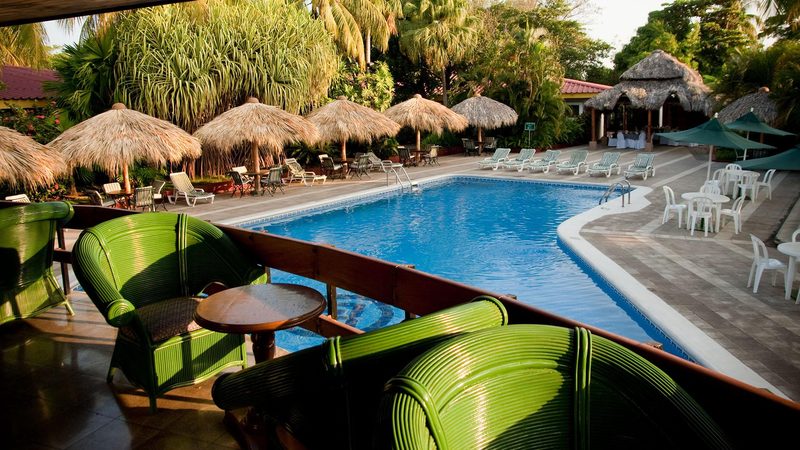
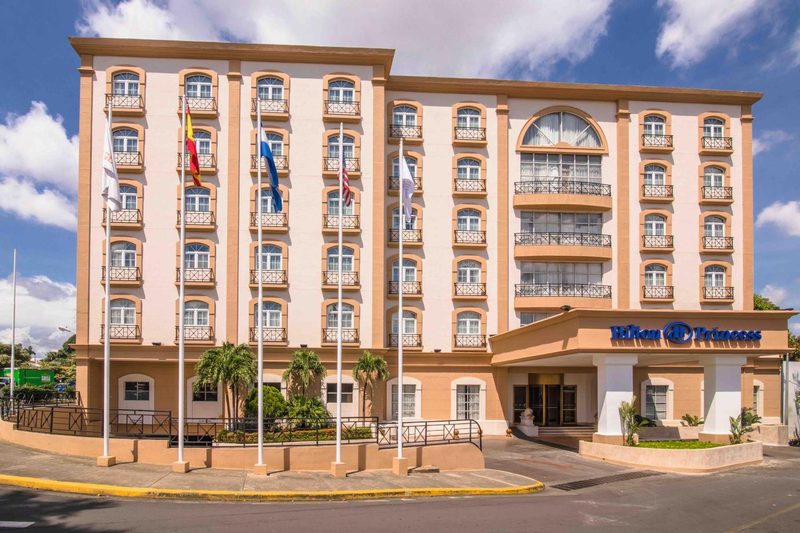
Hand-picked hotels across price tiers for March travellers.
Packing Checklist
Bookmark this page — your progress is saved between visits
Need the full list with shopping links?
Climate-specific gear, brand recommendations, and what to leave at home.
View Managua Packing List →Essential Tips
Insider knowledge and common pitfalls to avoid
Insider Knowledge
Managua does not have a downtown in any conventional sense. The 1972 earthquake leveled the historic center and it was never rebuilt as a walkable core. Instead, the commercial and social life of the city migrated southeast along the Carretera Masaya corridor, a strip of malls, restaurants, and nightlife stretching from the Metrocentro roundabout toward the suburb of Santo Domingo. That corridor is where you eat, drink, and spend your evenings. Trying to find a city center will only frustrate you.
Nacatamales are a Saturday night and Sunday morning ritual. These banana-leaf bundles of slow-cooked masa, pork, rice, potatoes, and olives take hours to prepare, and families across Managua start steaming them Saturday afternoon. Watch for hand-painted signs reading Hay Nacatamales pinned to fences in residential barrios by late Saturday. The best ones sell out before 9 AM Sunday. The unwrapping is part of the experience: peel back the dark green leaf, and the steam carries the smell of achiote and rendered pork fat.
Puerto Salvador Allende, the lakefront malecón along Lake Xolotlan, comes alive after 5 PM on Friday and Saturday evenings when Managuan families descend for the breeze off the water and the food vendors grilling carne asada and quesillos along the boardwalk. The same stretch at 2 PM on a weekday is a sun-blasted concrete promenade where nothing moves. Time your visit to the evening and you will understand why Managuans consider it the social heart of the city.
Managua's fritanga culture is the real street food story here, not restaurants. Fritangas are open-air grills set up on sidewalks and in front yards each evening, and the smoke from charcoal and sizzling beef, pork, and chicken drifts through residential neighborhoods from about 5 PM onward. You eat standing up or on a plastic chair, and the plate comes with gallo pinto, maduros, and a pile of curtido, a vinegary cabbage slaw that cuts through the richness. The Carretera Masaya area and the neighborhoods around Mercado Roberto Huembes tend to have the densest concentration.
Avoid These Mistakes
Trying to walk between attractions. Managua sprawls across a flat lake basin with long distances between points of interest, few continuous sidewalks, and stretches with no shade at all. Walking from Loma de Tiscapa to Puerto Salvador Allende is roughly 3 km (1.9 miles) of exposed, unshaded road that will flatten you in March heat. Use taxis, ride-hailing apps, or a guided tour with transport between stops.
Scheduling outdoor sightseeing at midday. First-time visitors underestimate how much 33°C (92°F) at near-equatorial latitude differs from 33°C in a temperate climate. The sun is directly overhead. Shade barely exists in public spaces. Heat exhaustion sets in fast. Structure your day in two halves: outdoors before 10 AM and again after 4 PM, with the middle hours spent in air-conditioned restaurants, markets, or your hotel pool.
Assuming Managua works like Granada or Leon. Those colonial cities are compact, walkable, and built around central plazas with clear tourist infrastructure. Managua is a decentralized capital that was reshaped by an earthquake and rebuilt without a traditional grid. Signage is minimal. Addresses are given as landmarks and directions rather than street numbers. Navigation takes getting used to. A guided city tour on your first day provides the orientation that saves confusion the rest of the trip.
Short on time? See day trips around Managua on GetYourGuide.
Ready to plan your trip to Managua?
Now that you've got the research covered, here's where to go next.
Explore More Activities in Managua
Didn't see anything interesting yet?
Browse Viator's full catalog of tours, day trips, food experiences, and private guides in Managua.
See All Managua Tours on Viator