Things to Do in Managua in October
October weather, activities, events & insider tips
Low Season · Budget Friendly
October Weather in Managua
Long-run averages for October
87°F (30°C)
High Temp
71°F (22°C)
Low Temp
11.0 inches (279 mm)
Rainfall
84%
Humidity
11
Sunny-Day UV
⚠ October's concentrated rainfall regularly floods low-lying streets and intersections across Managua. Areas near the lake and older barrios with limited drainage suffer most. Avoid driving or walking through standing floodwater. It conceals open drains and debris. Dangerous objects hide below. The depth is impossible to judge. Plan alternate routes. Allow extra travel time during and immediately after afternoon storms.
⚠ Standing water from daily rains creates peak breeding conditions for Aedes aegypti mosquitoes, which carry dengue, chikungunya, and Zika. Use DEET-based repellent consistently. Sleep in air-conditioned or screened rooms. Wear long sleeves and pants at dawn and dusk. Mosquito activity peaks then. Do not take chances.
⚠ The combination of extreme humidity and high temperatures creates heat stress risk. Travelers arriving from cooler climates face the highest risk. Hydrate aggressively. Limit midday exertion. Recognize the early signs of heat exhaustion, dizziness, nausea, confusion, which can escalate quickly in these conditions.
Making the most of October in Managua? Browse tours and activities in Managua on GetYourGuide.
Is October Right for You?
Weigh the advantages and considerations before booking
Advantages
- + October is Managua's quietest month for tourism. The Masaya Volcano night tours run half-empty instead of shoulder-to-shoulder. Day trips to Granada let you photograph the cathedral facade without twenty other cameras in frame. You can linger at a fritanga stand in Barrio Martha Quezada without holding up a queue. The pace is unhurried. This is the time to visit.
- + The rainy season transforms the volcanic landscape surrounding Managua. The hills along the Carretera a Masaya go deep green. Laguna de Apoyo fills to its brim and glows an almost unreal teal. Sunsets after afternoon storms are the best the city produces all year. The clouds break over Lake Xolotlán and the light turns copper and violet. You would not recognize this from dry-season photographs.
- + Accommodation rates drop noticeably from peak-season levels. The negotiating use shifts to travelers. Properties that require reservations weeks ahead during December or Semana Santa tend to have same-week availability in October. Upgrades come easier when occupancy is thin. Ask at check-in. You might get lucky.
- + October's heat and humidity push Managua's social life into the cooler evening hours. This is when the city is at its most alive. Puerto Salvador Allende fills up after sundown with families, couples, and vendors selling vigorón from wooden trays. The breeze off Lake Xolotlán drops the temperature enough that sitting outdoors with a Toña in hand feels like the most reasonable thing in the world. Wait until dark. Then head out.
Considerations
- − This is statistically Managua's wettest month, with 11.0 inches (279 mm) of rainfall. It tends to arrive in intense late-afternoon downpours. Thunder rolls across the lake basin. The streets flood within minutes in lower-lying areas like parts of Barrio Acahualinca and the roads around Mercado Oriental. You will lose at least a few afternoon hours to rain on most days. Build in flexibility. Plan accordingly.
- − The humidity sits at a relentless 84%. Paired with the 87°F (30°C) highs, the midday hours feel oppressive even by Managua standards. The air is heavy. Your clothes stick. Walking the city between roughly 11 AM and 3 PM becomes an exercise in endurance rather than pleasure. Air-conditioned spaces become genuine necessities, not luxuries. Seek them out.
- − Mosquito activity spikes with the standing water left by daily rains. Dengue and chikungunya are real concerns in Managua during October. The precautions are not optional. Wear long sleeves at dusk. Apply DEET-based repellent generously. Book accommodation with screened windows or reliable air conditioning that lets you sleep with windows closed. Do not skip this.
Settled on October? Compare hotel prices in Managua for your dates on Trip.com.
Best Activities in October
Top things to do during your visit
October brings the heaviest rain of Nicaragua's year. Managua averages 11.0 inches this month, more than any other. The downpours rarely last all day. Mornings break warm and still. The air hangs thick and close at 22 degrees Celsius before dawn, climbing toward 30 degrees by early afternoon. Then the sky darkens fast. Bruise-purple clouds stack above Lake Xolotlán. Rain arrives in sheets that hammer corrugated rooftops and send rivers coursing along the gutters of the Carretera Masaya. Within an hour the storm passes. The pavement steams. The city smells of wet concrete and frangipani. Time your outings to the morning window. October rewards with green volcanic slopes, uncrowded day trips, and a capital stripped of high-season tourist traffic. Managua is not a city of postcard plazas or cathedral spires. The 1972 earthquake shattered its colonial core. What remains is large, low-slung, navigated by landmarks rather than street names. The lakefront promenade at Puerto Salvador Allende draws families after the evening rain lifts. The smell of grilled meat and fried plantain drifts from open-air comedores. Neighborhoods like Altamira and Los Robles hold the capital's strongest restaurant and nightlife concentration. Fritanga stalls serve gallo pinto alongside charcoal-blackened carne asada. The rice is faintly smoky. The beans are slow-cooked until they collapse. Managua functions best as a launchpad. Within ninety minutes in any direction sit Granada's painted arcades, León's cathedral rooftops, and two of Central America's most accessible active volcanoes. October's lower visitor numbers mean smaller group sizes on tours and less competition for guides' attention. You'll want rain layers and dry bags for afternoon excursions.

Best of Granada, Mirador de Catarina and Masaya Volcano Tour
guided_experienceThe Best of Granada, Mirador de Catarina and Masaya Volcano Tour packs three of Nicaragua's defining landscapes into one day departing Managua. You ride south through the green flanks of the Sierras de Managua to Granada. The air shifts from diesel and dust to damp stone and incense of churches that have stood since the sixteenth century. Their facades are painted canary yellow and terracotta. The tour pauses at Mirador de Catarina, a clifftop overlook. Below, the enormous volcanic crater lake of Laguna de Apoyo stretches in a near-perfect circle. Its water is an impossible dark teal against the surrounding forest. From there, Masaya Volcano's Santiago crater delivers the day's most visceral moment. Standing at the rim, you hear the low rumble of shifting magma. You catch the acrid, sulfurous bite of volcanic gas. Parakeets wheel through the fumes, nesting impossibly in the crater walls.
Three radically different Nicaraguan landscapes in one day, from colonial streetscapes to a volcanic crater where you can hear the earth working beneath your feet.
Insider tip: Wear closed-toe shoes with grip for the crater rim walkway, which can be slick after rain. Bring a bandana or buff to cover your nose against the sulfur fumes, which intensify when the wind shifts toward the viewing platform.
This month: October's heavy rainfall can produce afternoon cloud cover that occasionally obscures the crater view at Masaya Volcano. Morning departures improve the odds of clear conditions at the rim.

From Managua: León, Sandboarding Cerro Negro + Cathedral UNESCO
culturalFrom Managua, the drive northwest to León crosses a broad, flat plain of sugarcane fields and cattle ranches. The city materializes. Its skyline is dominated by the white bulk of the Cathedral of the Assumption, a UNESCO World Heritage site and the largest cathedral in Central America. You climb to its rooftop. The bleached domes and bell towers spread beneath your feet. The chain of volcanoes along the Marribios range lines the horizon in a row of dark cones. The second act is Cerro Negro, a jet-black cinder cone barely two centuries old, one of the youngest volcanoes on earth. You hike forty-five minutes up a slope of loose black scoria. Wind whips volcanic grit against your shins. Then you sit on a wooden board and slide down the face at speeds that blur the landscape into a streak of charcoal and green.
The contrast between León's UNESCO cathedral rooftop, where you stand on whitewashed domes above the city, and the raw black slope of Cerro Negro, where you rocket downhill on volcanic ash, is one of the sharpest sensory pivots in Central American travel.
Insider tip: Wear long sleeves and long pants for the sandboarding descent, not for warmth but because volcanic grit shreds exposed skin on a fall. Close your mouth on the ride down to avoid a gritty mouthful of basalt.
This month: Wet volcanic ash from October rains makes the Cerro Negro descent slightly slower than in dry months, though the compacted surface can feel more controllable for first-timers. The hike up is more strenuous on rain-softened scoria.

2 full days tour Granada + Lava+Leon area
day_tripThe 2 Full Days Tour covering Granada, a lava-viewing excursion, and the León area is the commitment piece, a two-day immersion that removes the rushed feeling of single-day circuits. Day one takes in Granada's grid of colonial streets. Horse-drawn carriages clatter over cobblestones. The smell of cacao and roasted coffee drifts from doorways along Calle La Calzada. You visit Laguna de Apoyo or Masaya Volcano depending on conditions, then overnight in the Granada area. Day two pushes northwest toward León and its volcanic corridor, including a stop where flowing or recently cooled lava brings the geological violence of the isthmus into sharp, heat-radiating focus. Spreading the itinerary across two days means you eat dinner in Granada's plaza as the streetlights come on. You taste vigorón, the pork-and-yuca dish served on a banana leaf with a sharp curtido slaw. You aren't racing back to Managua in the dark.
Two days let you sleep in Granada and wake in León, absorbing the personality of each city at the pace locals live them rather than through a bus window.
Insider tip: Pack a small daypack with a rain jacket and a dry bag for electronics on day two. The route between Granada and León crosses open lowlands where October afternoon storms arrive fast and without shelter.
This month: October rainfall means the countryside between Granada and León is at peak green, with volcanic slopes thickly forested and crater lakes at their highest water levels. Road conditions remain paved and reliable on the main routes.

Cerro Negro volcano, VIP experiences "Individual and Group"!!!
private_tourThe Cerro Negro Volcano VIP experience strips the group-tour logistics away. You are on the black cone with a private guide who adjusts the pace to your fitness and curiosity. Cerro Negro is barely 168 years old, a geological infant. Its slopes are pure loose cinder with no vegetation, no topsoil, just dark volcanic rubble that crunches underfoot and radiates stored heat through the soles of your boots. The private format means your guide can walk you along the crater rim at the summit, pointing out fumaroles venting sulfur-yellow gas. No fifteen-person queue waits for their turn to board down. The descent itself, on a reinforced plywood sled, produces a roar of displaced gravel and a plume of fine black dust that coats every surface of your body.
A private guide on Cerro Negro means you control the pace on the climb, linger at the fumaroles, and ride down when the slope is clear rather than in a chain of other boarders.
Insider tip: Ask your guide to take the slightly longer approach trail on the windward side. It has a view into the older crater and catches a cooler crossbreeze on the ascent.
This month: October's frequent rain can leave the upper slopes of Cerro Negro damp in the early morning, which tamps down the dust on the hike but also slows the sandboarding speed slightly compared to dry-season conditions.

Masaya Volcano Night Tour!!!
guided_experienceThe Masaya Volcano Night Tour takes you to the rim of the Santiago crater after dark. The reason for the trip becomes unmistakable: a lake of molten lava glows deep orange and red at the bottom of the vent, pulsing and shifting as gases escape in bursts that throw spatters of incandescent rock against the crater walls. Masaya is one of a handful of volcanoes on earth where you can observe an active lava lake from a paved overlook. At night the surrounding darkness eliminates every visual distraction. The world collapses to the glow below and the smell of sulfur around you. The heat rising from the crater carries that sharp, metallic tang that catches in the back of your throat. The low, intermittent rumble beneath the viewing platform reminds you that the stone under your feet is a thin lid on something enormous.
Standing above a glowing lava lake at night, with nothing between you and the molten rock but the crater walls, is one of the most elemental travel experiences in the Americas.
Insider tip: Bring a headlamp with a red-light mode rather than a white flashlight. It preserves your night vision and lets you see the lava glow more intensely. Arrive early in the evening window to secure a spot at the closest viewpoint along the crater rim.
This month: October cloud cover can occasionally obscure the crater. But because the lava lake glows from below, even moderate cloud or mist tends to light up dramatically rather than block the view entirely. Heavy rain will cancel the visit.

Nicaragua: Private Shuttle Service from Airport to Hotel Managua
transportThe Nicaragua Private Shuttle Service from Airport to Hotel in Managua solves the most stressful moment of any Managua arrival: stepping out of Augusto C. Sandino International Airport into a scrum of informal taxi drivers quoting wildly different fares in a city with no visible street grid. A prearranged driver holds your name, loads your bags, and delivers you to your hotel door in air-conditioned quiet while you decompress from the flight. The drive from the airport to the main hotel zones along the Carretera Masaya or near Metrocentro takes twenty to forty minutes depending on traffic and time of day. You pass through a corridor of commercial strips, rotondas marked by oversized monuments, and the low skyline of a capital that builds outward rather than upward.
Eliminating the airport taxi negotiation in a city where addresses are given by landmarks rather than street numbers is worth every bit of the fare, after a long flight.
Insider tip: Send your driver the hotel name and the nearest rotonda or landmark in advance. Managua navigation relies on reference points like 'two blocks south of the old Pepsi factory' rather than formal addresses. Even local drivers sometimes need the landmark to find boutique properties.
Where to Stay in Managua in October
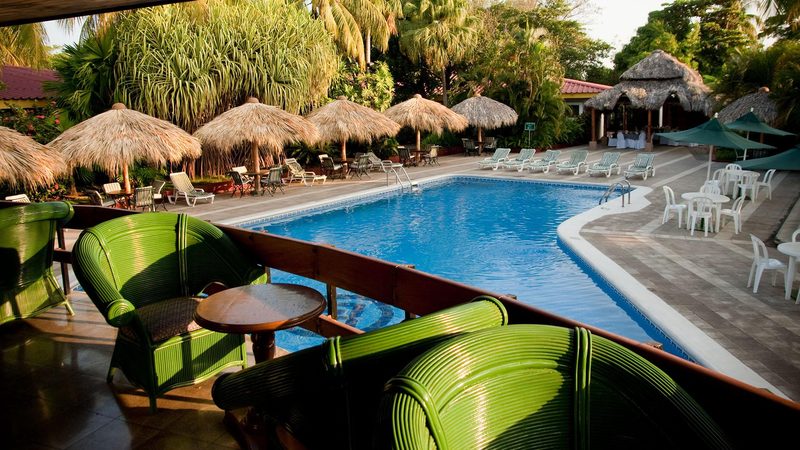
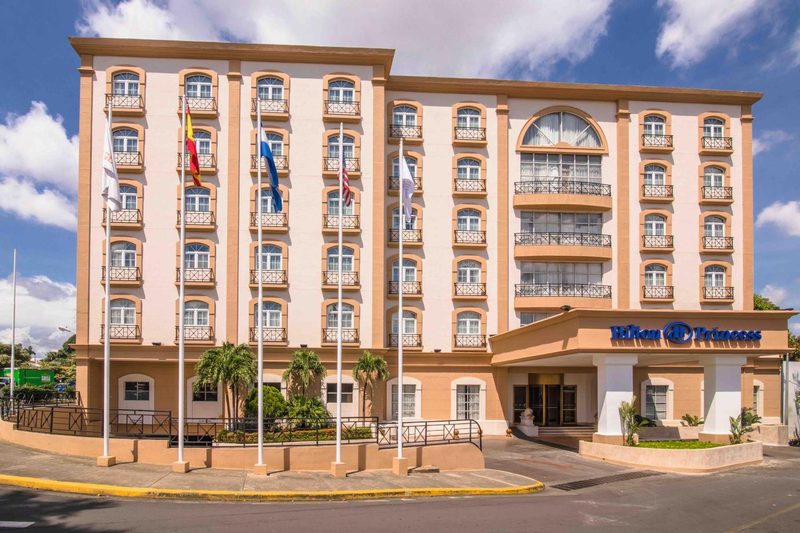
Hand-picked hotels across price tiers for October travellers.
Public Holidays in October
Dates that affect opening hours, transport and crowds
Indigenous Resistance Day
Observed nationwide as a public holiday.
Indigenous Resistance Day
Observed nationwide as a public holiday.
Indigenous Resistance Day
Observed nationwide as a public holiday.
Packing Checklist
Bookmark this page — your progress is saved between visits
Need the full list with shopping links?
Climate-specific gear, brand recommendations, and what to leave at home.
View Managua Packing List →Essential Tips
Insider knowledge and common pitfalls to avoid
Insider Knowledge
Managua's afternoon storms in October follow a remarkably predictable rhythm. The clouds build from the south starting around 1 PM. The sky turns a bruised grey-green by 2 PM. The rain hits between 2:30 and 4 PM with startling force. Locals plan around this without thinking about it. Morning is for errands and outdoor activity. Early afternoon is for lunch and siesta. The city comes back to life after 5 PM when the streets steam dry. Match this rhythm and October becomes manageable. Fight it and you will spend half your trip soaked and frustrated.
The fritanga stands that line the residential streets of Barrio Martha Quezada and the roads near the Universidad Centroamericana serve Managua's real evening food. You will find grilled pork, tajadas (fried green plantain chips), gallo pinto, and a vinegary cabbage slaw called ensalada, all served on a banana leaf. The smoke from the charcoal grills hangs in the humid air and mixes with the smell of frying plantain. The flavor of the pork, marinated in sour orange and achiote, then grilled until the fat crisps, is something no restaurant replicates at that quality. Eat where you see families eating.
Puerto Salvador Allende, the lakefront malecón, is Managua's social center on weekend evenings. Go on a weeknight in October and you get the breeze, the view across Lake Xolotlán to the silhouette of the Chiltepe peninsula, and the vigorón vendors to yourself. Vigorón is the city's signature street dish: a mound of yuca topped with chicharrón (fried pork skin, still warm and crackling) and curtido (a tangy pickled cabbage), served on a banana leaf. The contrast between the starchy yuca, the fatty crunch of the chicharrón, and the sour bite of the curtido is Managua on a plate.
Managua taxis do not use meters. Negotiating the fare before you get in is not optional. It is how the system works, and locals do it too. In October's low tourist season, drivers are more flexible on price. Establish the number clearly before the door closes. Ride-hailing apps work in Managua and remove the negotiation. The slight premium is worth the ease. For the Masaya Volcano or day trips, pre-arranged transport through your accommodation or tour operator is simpler. It is often cheaper than negotiating a taxi round-trip.
Avoid These Mistakes
Here is what not to do: schedule outdoor activities after noon, then act surprised when a wall of rain cancels the plan. October's storms are not gentle drizzles. They are concentrated downpours that flood streets and reduce visibility. Front-load your outdoor itinerary into the morning hours. Keep afternoons flexible for indoor sites, markets, or simply waiting out the weather with a cup of Nicaraguan coffee.
Treating Managua as a city you can simply walk across like Granada or León. The 1972 earthquake and subsequent unplanned rebuilding left Managua with no real walkable center. Distances between landmarks are significant. The midday heat makes walking between them in October dangerous to your health. Use taxis, ride-hailing apps, or organized transport between different sites. Save your walking energy. Focus on concentrated areas like Puerto Salvador Allende, Mercado Roberto Huembes, or the Plaza de la Revolución cluster itself.
Skipping Managua entirely and using the airport only as a way into Granada or León. The city rewards a day or two of attention. See the roofless cathedral. Visit the Loma de Tiscapa crater. Walk the Huellas de Acahualinca (2,100-year-old human footprints preserved in volcanic mud). Feel the evening energy of the malecón. These experiences exist nowhere else in Nicaragua. Managua is not conventionally pretty. It is honest. It is strange. It is worth your time.
Short on time? See day trips around Managua on GetYourGuide.
Ready to plan your trip to Managua?
Now that you've got the research covered, here's where to go next.
Explore More Activities in Managua
Didn't see anything interesting yet?
Browse Viator's full catalog of tours, day trips, food experiences, and private guides in Managua.
See All Managua Tours on Viator